
Ontario Heritage Conference: Friday Session & Tour Topics
Fri, Jun 19
|LIUNA Station
TICKETS AVAILABLE NOW!
Time & Location
Jun 19, 2026, 8:00 a.m. – 9:30 p.m.
LIUNA Station, 360 James St N, Hamilton, ON L8L 4M7, Canada
About the event
Get your tickets at https://cvent.me/Nyg8XR?RefId=OHC+2026
Please note that the schedule and program elements may be subject to change
FRIDAY JUNE 19, 2026
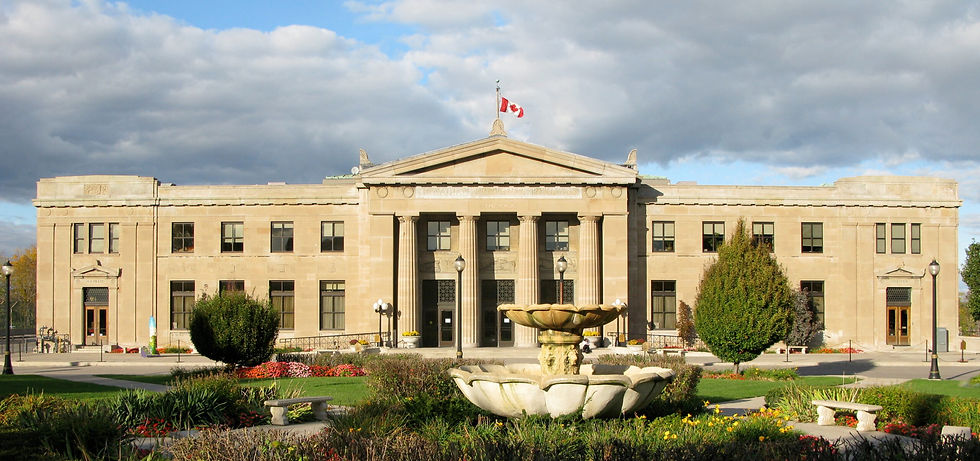
Friday's conference events will be centred out of Liuna Station Banquet and Convention Centre, located along Hamilton’s James Street North in Hamilton’s historic North End. This location is just a short walk away from Hamilton’s waterfront and with the West Harbour Go station situated directly across the street, commuters will have easy access to the conference site.
LIUNA Station will be the hub of our Conference activities for the day, including keynote, speaker panels, a marketplace and both self-guided and guided walking tours. During the event, attendees will see a showcase of adaptive reuse projects related to industrial heritage properties and be offered access to a variety of session topics that will explore key issues impacting built heritage and heritage landscapes across the province. Walking tours will take attendees to local heritage sites including, the Worker's Arts and Heritage Centre (WAHC), the Hamilton Industrial Trail, James Street North and the Coppley Buildings.
The evening will be capped off by the annual Gala Dinner to be held in the Grand Ballroom at LIUNA Station. This space was once the main concourse that served as a bustling waiting area for train travelers until its adaptive reuse as a conference centre.
SESSION & TOUR TOPICS
8:00 am – 9:00 am
Registration, Breakfast, Networking and Vendor Marketplace
(Note: Vendor Marketplace open 8am – 6pm)
9:00 am – 10:30 am
Welcome Keynote: Adaptive Reuse
A panel will discuss the importance of historic industrial spaces, their potential for adaptive reuse and the design challenges faced along the way. Speakers will explore the Niagara Parks Power Station conversion to a hands-on museum and the adaptation of Hamilton’s Cotton Factory into workshops, galleries, office space for creative professionals and studios for artists.
Note: sessions qualifies for 1.5 hrs Structured OAA Continuing Education Credit
11:00 am - 12:30 pm – Morning Options (Tours and Sessions)
Chose 1 of the following options:
Preventing Demolition by Neglect
Demolition by neglect can be expected to increase as building owners continue to struggle with a failing real estate market. To prevent neglect municipalities, have to navigate the complex relationship between the Municipal Act, The Heritage Act and The Building Code. This session will explore some of the tools and tactics that are used in the management of neglect of heritage buildings in the context of the City of Hamilton and Town of Oakville and their effectiveness.
Note: session qualifies for 1.5 hrs Structured OAA Continuing Education Credit
Conservation of Heritage Resources through Circularity: Strategies for Rehabilitation and Salvage
“The greenest building is…one that is already built,” a phrase coined by architect Carl Elephante, captures the spirit of this session where architects, buildings scientists, deconstruction experts and heritage masonry specialists discuss how participating in the circular economy through the conservation of existing buildings and the reuse of historic building materials can reduce our carbon footprint. The construction and demolition industries are linear economies, using resources to make products that ultimately end up in the landfill, whereas the circular economy aims to eliminate waste, circulate salvaged products and materials and regenerate nature. By rehabilitating historic buildings and circulating salvaged materials for reuse, we can eliminate unnecessary waste, even unseen waste like a product’s total greenhouse gas emissions from extraction to disposal, also known as “embodied” or “upfront carbon.” Join these experts to learn more about rehabilitating historic buildings, the process of deconstruction and salvage when restoration isn’t possible and how measuring embodied carbon allows us to understand the environmental impact of the built environment.
Note: session qualifies for 1.5 hrs Structured OAA Continuing Education Credit
From Union to Hamilton, case studies of industrial heritage projects in the GTHA
Industrial heritage sites across Ontario present complex challenges where aging historic structures and landscapes must adapt to contemporary infrastructure and development demands. These sites include a wide spectrum of cultural heritage resources including built heritage properties, cultural heritage landscapes, and archaeological sites, each carrying distinct historical, architectural, and community values. WSP demonstrates how heritage conservation and infrastructure development can not only coexist, but how appropriate heritage conservation can add value to infrastructure development. By embedding conservation principles in early project stages, industrial heritage sites can evolve to meet modern needs while preserving the character and stories that define Ontario’s cultural landscape.
Note: session qualifies for 1.5 hrs Structured OAA Continuing Education Credit
Walking Tour – Historic James Street North and the Coppley Project
Built in three phases between 1856 and 1911, the Coppley Building at 56 York Boulevard is a survivor of Hamilton's "Stone Age". Associated with the City's textile industry for over a century and a half, this landmark Renaissance Revival commercial building will soon reopen featuring residential units, mixed use spaces and a boutique hotel. You are invited to come tour the Coppley and view the ongoing adaptive reuse as it progresses.
Note: session qualifies for 1.5 hrs Structured OAA Continuing Education Credit
Walking Tour – Central Neighbourhood: Adaptive Reuse of Industrial Properties
Join us on a walking tour of Central, one of Hamilton's four original neighbourhoods. On our route we will visit the surviving industrial buildings that dot this area, including the Felton Brush Factory, the Hamilton Bridge Works complex, and the former Customs House (now the Worker's Art and Heritage Center). Learn about the interesting histories of these buildings and their successful adaptive reuse to new purposes.
Note: session qualifies for 1.5 hrs Unstructured OAA Continuing Education Credit
Walking Tour - Industrial North-End Waterfront Trail and Workers Arts & Heritage Centre (WAHC)
Explore some of Hamilton's Industrial North End history, include a tour of the Workers Arts and Heritage Centre. WAHC is located in the Custom House (1858-60), a National Historic Site and one of the oldest remaining ‘federal’ public buildings in Canada. Its style and construction reflect the rise of Hamilton as a major railway and Great Lakes port. It is often cited as “one of Hamilton’s foremost architectural landmarks.”
Note: session qualifies for 1.5 hrs Unstructured OAA Continuing Education Credit
1:30 pm - 3:00 pm – Afternoon Option A (Tours and Sessions)
Chose 1 of the following options:
Designating Industrial Buildings
Designating an industrial building can be a very different sort of proposition than designating a house, school or church. Join our presenters as they explore some recent (and not so recent) industrial designations to discuss the challenges, successes and insights gained in protecting industrial heritage.
Note: session qualifies for 1.5 hrs Structured OAA Continuing Education Credit
Success Stories in Industrial Adaptive Reuse: Preserving our Cultural Heritage
Discover how visionary projects are transforming old industrial spaces into vibrant hubs of innovation, culture, and sustainability. This panel brings together experts to share inspiring success stories of adaptive reuse in industrial settings. Explore how these projects preserve heritage, reduce environmental impact, and revitalize communities by creatively repurposing existing structures. From abandoned factories to warehouses, learn about the challenges overcome, innovative design solutions, and the economic and social benefits generated.
Note: session qualifies for 1.5 hrs Structured OAA Continuing Education Credit
Preserving Our Cultural Heritage Landscapes
Hamilton’s Monument Trees offer an entry point into understanding the city’s natural heritage and broader issues of climate change, revealing how each significant tree acts as a sign or marker of layered ecological, cultural, and urban design history. This talk will explore the role of Monument Trees within Hamilton’s shifting landscape, connecting past land use to contemporary urban restoration and climate resilience strategies. Drawing on our studio’s ongoing research, this work highlights how field documentation, ecological study, and community engagement shape our approach.
Note: session qualifies for 1.5 hrs Structured OAA Continuing Education Credit
Walking Tour – Historic James Street North and the Coppley Project
Built in three phases between 1856 and 1911, the Coppley Building at 56 York Boulevard is a survivor of Hamilton's "Stone Age". Associated with the City's textile industry for over a century and a half, this landmark Renaissance Revival commercial building will soon reopen featuring residential units, mixed use spaces and a boutique hotel. You are invited to come tour the Coppley and view the ongoing adaptive reuse as it progresses.
Note: session qualifies for 1.5 hrs Structured OAA Continuing Education Credit
Walking Tour – Central Neighbourhood: Adaptive Reuse of Industrial Properties
Join us on a walking tour of Central, one of Hamilton's four original neighbourhoods. On our route we will visit the surviving industrial buildings that dot this area, including the Felton Brush Factory, the Hamilton Bridge Works complex, and the former Customs House (now the Worker's Art and Heritage Center). Learn about the interesting histories of these buildings and their successful adaptive reuse to new purposes.
Note: session qualifies for 1.5 hrs Unstructured OAA Continuing Education Credit
Walking Tour - Industrial North-End Waterfront Trail and Workers Arts & Heritage Centre (WAHC)
Explore some of Hamilton's Industrial North End history, include a tour of the Workers Arts and Heritage Centre. WAHC is located in the Custom House (1858-60), a National Historic Site and one of the oldest remaining ‘federal’ public buildings in Canada. Its style and construction reflect the rise of Hamilton as a major railway and Great Lakes port. It is often cited as “one of Hamilton’s foremost architectural landmarks.”
Note: session qualifies for 1.5 hrs Unstructured OAA Continuing Education Credit
3:30 pm – 5:00 pm - Afternoon Option B (Tours and Sessions)
Chose 1 of the following options:
Conservation of Heritage Resources through Circularity: Policy and Process
This session focuses on how existing heritage policies and municipal processes can be leveraged to advance circularity in practice. The discussion will examine how current documentation, conservation, and demolition review frameworks already provide a foundation for circular approaches — and how they can be strengthened to support full building reuse, adaptive retention, and structured material recovery.
A short opening presentation will outline a practical progression, 1. Aligning circularity with existing heritage policy tools, 2. Prioritizing full building reuse and retention strategies, 3. Introducing Salvage Feasibility Assessments to inform demolition and capital planning decisions, 4. Moving from building-level conservation to material-level reuse through clearer reporting and process integration.
The session will then transition to a moderated panel discussion with representatives from the City of Brampton and the City of Hamilton, who will share how documentation requirements, salvage reporting, and circular economy objectives are being integrated into municipal policy and approvals workflows. Together, the panel will explore how heritage professionals can move from policy alignment to practical implementation, and how structured reuse processes can support both conservation outcomes and broader sustainability goals
Note: session qualifies for 1.5 hrs Structured OAA Continuing Education Credit
From Traditional Knowledge to Contemporary Craft
Moderated by Planner and Architect Julian Smith, founder of the M.A. program in Heritage Conservation at Carleton University, a developer of the Willowbank School of Restoration Arts, and appointee to the Order of Canada, this panel will focus on illustrating examples of how learning traditional knowledge informs the practice of craft skills based on a respect and understanding of traditional materials, methods, and applications for conservation initiatives. Speakers include Spencer Luham Jr, traditional basket weaver of the Chippewas of Kettle & Stony Point First Nation who has been practicing his craft for 22 years, and Doug Vickers, tradesperson and traditional carpenter who has worked in Canada and internationally including the restoration and reconstruction of multiple 19th century buildings. This panel was organized in partnership between the Willowbank School of Restoration Arts and the Architectural Conservancy of Ontario (ACO).
Finding Historical Facts with Digital Research
How to access digital versions of important heritage resources including the 1880 County Atlas series, Ontario Fire Insurance Maps and Historical Census data. “Hands on” demonstrations of how to access basic information available on each site, then how to use what you have learned along with what you already know to uncover further historic details – not unlike solving a mystery. Participants could opt to use their own digital devices to follow along and access their own relevant resources.
Note: session qualifies for 1.5 hrs Structured OAA Continuing Education Credit
Walking Tour – Historic James Street North and the Coppley Project
Built in three phases between 1856 and 1911, the Coppley Building at 56 York Boulevard is a survivor of Hamilton's "Stone Age". Associated with the City's textile industry for over a century and a half, this landmark Renaissance Revival commercial building will soon reopen featuring residential units, mixed use spaces and a boutique hotel. You are invited to come tour the Coppley and view the ongoing adaptive reuse as it progresses.
Note: session qualifies for 1.5 hrs Structured OAA Continuing Education Credit
Walking Tour – Central Neighbourhood: Adaptive Reuse of Industrial Properties
Join us on a walking tour of Central, one of Hamilton's four original neighbourhoods. On our route we will visit the surviving industrial buildings that dot this area, including the Felton Brush Factory, the Hamilton Bridge Works complex, and the former Customs House (now the Worker's Art and Heritage Center). Learn about the interesting histories of these buildings and their successful adaptive reuse to new purposes.
Note: session qualifies for 1.5 hrs Unstructured OAA Continuing Education Credit
Walking Tour - Industrial North-End Waterfront Trail and Workers Arts & Heritage Centre (WAHC)
Explore some of Hamilton's Industrial North End history, include a tour of the Workers Arts and Heritage Centre. WAHC is located in the Custom House (1858-60), a National Historic Site and one of the oldest remaining ‘federal’ public buildings in Canada. Its style and construction reflect the rise of Hamilton as a major railway and Great Lakes port. It is often cited as “one of Hamilton’s foremost architectural landmarks.”
Note: session qualifies for 1.5 hrs Unstructured OAA Continuing Education Credit
5:00 pm – 6:00 pm
Community Heritage Ontario – AGM
Members of the CHO are invited to attend the Annual General Meeting for an organizational update, which will include approval of financial reports and elections to the CHO board.
6:00pm – 9:30 pm
Gala Event & Dinner
Liuna Station – Grand Ballroom